
In the absence of a vaccine, countries globally have resorted to social distancing, travel restrictions and economic lockdowns to reduce transmission of the coronavirus. While necessary to preserve human life, the socioeconomic costs of these blunt policy measures are high, especially in Sub-Saharan Africa where many live hand-to-mouth and lack access to safety nets to […] Source: IFPRI Ghana
MoFA and IFPRI Analyze Commodity Market Price Trends Before and After PFJ
As part of the monitoring and evaluation (M&E) of Ghana’s Planting for Food and Jobs (PFJ) program, the Statistics Research and Information Directorate (SRID) and the Policy Planning Monitoring and Evaluation Directorate (PPMED) of the Ministry of Food and Agriculture (MoFA), in partnership with IFPRI’s Ghana Strategy Support Program (GSSP), recently published a series of […] Source: IFPRI Ghana
Value Chain Development to benefit smallholders in Ghana: The effectiveness of selected interventions
Value chains are series of activities or processes that aim at creating and adding value to any product at every step during the production process. How, where, and when might it be appropriate to intervene in value chains, particularly to benefit smallholders? In their paper on value chain development, Shashi Kolavalli and co-authors examined interventions […] Source: IFPRI Ghana
Beneficiary Views on Cash and In-Kind Payments Evidence from Ethiopia’s Productive Safety Net Programme
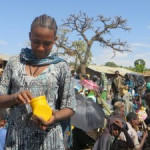
New World Bank Policy Research Working Paper by Kalle Hirvonen and John Hoddinott. Abstract: Economists often default to the assumption that cash is always preferable to an in-kind transfer. Do beneficiaries feel the same way? This paper addresses this issue using longitudinal household data from Ethiopia where a large-scale social safety net intervention (PSNP) operates. […] Source: IFPRI Ethiopia: Ethiopia Strategy Support Program
Development of the project-level Women’s Empowerment in Agriculture Index (pro-WEAI)
With growing commitment to women’s empowerment by agricultural development agencies, sound methods and indicators to measure women’s empowerment are needed to learn which types of projects or project-implementation strategies do and do not work to empower women. The Women’s Empowerment in Agriculture Index (WEAI), which has been widely used, requires adaptation to meet the need […] Source: Women’s Empowerment in Agriculture Index (WEAI)
- « Previous Page
- 1
- …
- 3
- 4
- 5
- 6
- 7
- …
- 17
- Next Page »
