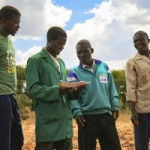
The Lead farmer (LF), model or contact farmer, or farmer-to farmer extension approach has been traditionally part of most extension models for decades. Past LF approaches have been criticized for the selection of richer and progressive farmers as well as for limited productivity and development impact. The revived LF concept contributed to a new batch >> Read more Source: Malawi Strategy Support Program
Towards a capacity-based resilience building for social cash transfer beneficiaries in Malawi

By design, Social Cash Transfer programs (SCTP) in Malawi target the poorest section of society. But this does not mean that the “poorest” are a homogenous group. There are differences in access to land and ability to work productively. Development players must take this into account by designing interventions that provide different capacity-based packages to >> Read more Source: Malawi Strategy Support Program
Key Facts Sheet: Inequality

IFPRI Malawi is pleased to announce the publication of a fourth Key Facts Sheet highlighting recent trends in inequality in Malawi. This follows fact sheets on agriculture, food and nutrition security and social safety nets. The series is being produced using the third and fourth Integrated Household Surveys (IHS), the latter of which was undertaken in 2016/17. The series synthesizes nationally representative >> Read more Source: Malawi Strategy Support Program
Working Paper 27: Malawi’s Challenging Employment Landscape
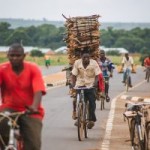
Working Paper 27 examines Malawi’s challenging employment landscape, focusing on the country's rapidly growing youth population. Using three rounds of the Integrated Household Survey, carried out between 2004 and 2016, the authors found little evidence of a structural transformation in Malawi’s economy or of youth benefiting from changing patterns of employment. While the share of >> Read more Source: Malawi Strategy Support Program
Shelter from the Storm? Household-Level Impacts of, and Responses to, the 2015 Floods in Malawi

Overdependence on rain-fed agriculture by rural households in Malawi puts them at risk of crop losses tied to extreme weather events, like floods and droughts. In recent years, Malawi has experienced an increase in frequency, intensity and spread of these events. In January 2015, severe flooding in Malawi affected over a million families, displacing 230,000 >> Read more Source: Malawi Strategy Support Program
