
Article re-posted from IFPRI.ORG. September 5, 2019, Washington, D.C. - The Board of Trustees of the International Food Policy Research Institute (IFPRI) announced today the appointment of Johan “Jo” Swinnen as the institute’s next Director General. Swinnen will begin his tenure on January 7, 2020, succeeding the current Director General, Shenggen Fan, who is completing his term. “Jo brings >> Read more Source: Pakistan Strategy Support Program
2019 ECAMA Research Symposium (Sept 18-19)

The Economics Association of Malawi (ECAMA), in collaboration with the National Planning Commission (NPC), Malawi Strategy Support Program of the International Food Policy Research Institute (IFPRI), University of Malawi (UNIMA), the Government of Malawi, and the European Union (EU) have organized a third joint research symposium. It will bring together local and international researchers, >> Read more Source: Malawi Strategy Support Program
Improving Access to Land for Women in the Arab World: Policy Options and Tools for Triggering Social and Economic Development

September 11, 2019
Everlyne Nairesia, Global Land Indicators Coordinator, UN-Habitat/Global Land Tool Network
Sina Schlimmer, Research and Peri-Urban Land Consultant, UN-Habitat/Global Land Tool Network
Ombretta Tempra, Human Settlements Officer, UN-Habitat/Global Land Tool Network
It is estimated that in developing countries, women are responsible for the production of 60 to 80 percent of food and yet, they rarely own the agricultural land. They work with low tenure security, little decision-making power and limited control over land use. [...] Source: IFPRI Egypt Country Office
Effect of changes in population density and crop productivity on farm households in Malawi
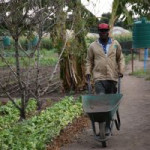
A new open access article by Adam M. Komarek and Siwa Msangi, first published on August 16, 2019 in Agricultural Economics, examines the ex-ante farm-household effects of changes in family size, yield potential, and yield gaps using a farm-household simulation model that reflects the economic and biophysical conditions of central Malawi. The study, conducted in >> Read more Source: Malawi Strategy Support Program
Post-harvest losses in rural-urban value chains: Evidence from Ethiopia

ESSP Working Paper 135, by Bart Minten, Seneshaw Tamru, and Thomas Reardon. Abstract: We study post-harvest losses (PHL) in important and rapidly growing rural-urban value chains in Ethiopia. We analyze self-reported PHL from different value chain agents – farmers, wholesale traders, processors, and retailers – based on unique large-scale data sets for two major commercial >> Read more Source: Ethiopia Strategy Support Program
- « Previous Page
- 1
- …
- 811
- 812
- 813
- 814
- 815
- …
- 912
- Next Page »
