
The Nigeria Strategy Support Program (NSSP) Working Paper No. 59, entitled “The enabling environment for informal food traders in Nigeria’s’ secondary cities”, and co-authored by Danielle Resnick, Bhavna Sivasubramanian, Idiong Christopher Idiong, Mich... Source: IFPRI Nigeria Country Office
Tracking anemia and its determinants from 2006 to 2016 in India: Insights from the National Family Health Survey-4
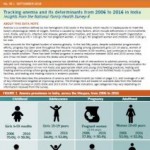
India accounts for the highest burden of anemia globally. In the last fifty years, despite substantial programmatic efforts, progress has been slow throughout the lifecycle including among adolescent girls (15-19 years), women of reproductive age (15-49 years) (WRA), pregnant women, and children (6-59 months), and continues to be a major public health problem. There has >> Read more Source: POSHAN: Partnerships and Opportunities to Strengthen and Harmonize Actions for Nutrition in India
NEW STUDY: Urbanization associated with lower rates of child stunting but higher rates of obesity among women

Washington, D.C: Urbanization is changing the landscape of health and nutrition in Africa, and in Nigeria it relates to both lower levels of stunting among children and higher rates of obesity among women, according to two recent studies by researchers... Source: IFPRI Nigeria Country Office
Further Strengthening NAERLS’ Ability to Conduct Nigeria’s Annual Agricultural Performance Survey
When a training producing far-reaching results for an institution and agricultural policymaking in a country, then it becomes more than a training. When Motunrayo Oyeyemi and Segun Fadare, two (2) researchers from the Nigeria Office of the Internationa... Source: IFPRI Nigeria Country Office
Publication: Targeting Social Safety Nets Using Proxy Means Tests: Evidence from Egypt’s Takaful and Karama Program

Sikandra Kurdi, Clemens Breisinger, Hagar ElDidi, Hoda El-Enbaby, Daniel O. Gilligan, and Naureen Karachiwalla
This chapter from ReSAKSS Annual Trends and Outlook Report (2017-2018) uses Egypt as a case study to examine the effectiveness of proxy means test (PMT) targeting. Targeting effectiveness is defined in terms of the ability of the program to enroll beneficiaries from the lowest two quintiles of the expenditure distribution. Source: IFPRI Egypt Country Office
- « Previous Page
- 1
- …
- 856
- 857
- 858
- 859
- 860
- …
- 912
- Next Page »
