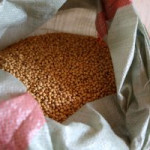
IFPRI Malawi congratulates Kate Ambler, Alan de Brauw, and Susan Godlonton, who received the 2018 AAERS-Wiley Blackwell Australian Journal of Agricultural and Resource Economics Award for their paper, "Measuring Post-harvest Losses at the Farm Level in Malawi." The award was presented during the 63rd Annual AARES Conference in Melbourne, Australia. About the study Reducing food >> Read more Source: Malawi Strategy Support Program
Policy Note 33: Commodity Exchanges and Warehouse Receipts in Malawi
Malawi is unusual in having two active commodity exchanges (Comex): The Agricultural Commodity Exchange (ACE), established 2006, and Auction Holdings Commodity Exchange (AHCX) Ltd., established in 2013. In addition, Malawi has several parallel ‘systems’ that advance collateral financing using warehouse receipts. Policy Note 33 distils the findings of Working Paper 25, which analysed how Malawi's >> Read more Source: Malawi Strategy Support Program
NEW STUDY: Air pollution from India’s stubble burning leads to USD 35 billion economic losses, poses significant health risk

Living in districts with air pollution from intense crop residue burning (CRB) is a leading risk factor for acute respiratory infection (ARI), especially among children less than five years, in northern India. Additionally, CRB also leads to an estimated economic loss of over USD 35 billion annually. These are the key findings of a new study from researchers at the International Food Policy Research Institute (IFPRI) and partner institutes. The study estimates—for the first time—the health and economic costs of CRB in northern India. Source: IFPRI South Asia Office
India’s child nutrition program shows strides in utilization, but fewer gains in high malnutrition states

Expansion and utilization of one of India’s largest government-run community-based nutrition programs increased significantly between 2006 and 2016, especially among historically disadvantaged castes and tribes. But, women with low education and the poorest households are relatively more excluded from accessing program benefits. Among states too, while overall utilization has improved, high malnutrition states are relatively >> Read more Source: POSHAN: Partnerships and Opportunities to Strengthen and Harmonize Actions for Nutrition in India
NEW STUDY: India’s child nutrition program shows strides in utilization, but fewer gains in high malnutrition states
Expansion and utilization of one of India’s largest government-run community-based nutrition programs increased significantly between 2006 and 2016, especially among historically disadvantaged castes and tribes. But, women with low education and the poorest households are relatively more excluded from accessing program benefits. Among states too, while overall utilization has improved, high malnutrition states are relatively lagging. These are the findings of a new study, the first to offer an in-depth analysis of the utilization of the Integrated Child Development Services (ICDS)* program, conducted by researchers at the International Food Policy Research Institute (IFPRI). Source: IFPRI South Asia Office
- « Previous Page
- 1
- …
- 180
- 181
- 182
- 183
- 184
- …
- 209
- Next Page »
