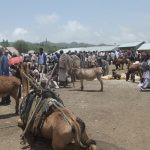
It is widely feared that the shock of the COVID‐19 pandemic will lead to a significant worsening of the food security situation in low and middle‐income countries. One reason for this is the disruption of food marketing systems and subsequent changes in farm and consumer prices. Based on primary data in Ethiopia collected just before […] Source: IFPRI Ethiopia: Ethiopia Strategy Support Program
Assessing response fatigue in phone surveys: Experimental evidence on dietary diversity in Ethiopia

The COVID-19 pandemic has spurred interest in the use of remote data collection techniques, including phone surveys, in developing country contexts. This interest has sparked new methodological work focusing on the advantages and disadvantages of different forms of remote data collection, the use of incentives to increase response rates and how to address sample representativeness. […] Source: IFPRI Ethiopia: Ethiopia Strategy Support Program
Is poverty in Myanmar on the rise? Predictions from Google mobility data

Using econometric models as well as recent Google consumer mobility data, MAPSA researchers predict what may be happening to poverty in Myanmar in 2021. Source: IFPRI Myanmar – The Myanmar Strategy Support Program
Monitoring the agri-food system in Myanmar: Agricultural input retailers (March)
Agricultural input retailers play a key role in Myanmar’s agri-food system by supplying farmers with fertilizer, seeds, pesticides, and other inputs necessary for successful harvests. Source: IFPRI Myanmar – The Myanmar Strategy Support Program
Impacts on crop trading: Lessons learned in Myanmar (March)
Crop traders in Myanmar serve as important links between farms and food processors, exporters, and other downstream actors. Thus, challenges for crop traders caused by recent disruptions have important implications for crop marketing and prices. Source: IFPRI Myanmar – The Myanmar Strategy Support Program
- « Previous Page
- 1
- …
- 537
- 538
- 539
- 540
- 541
- …
- 912
- Next Page »
